How to Choose the Correct Motorola Bluetooth Accessory for your Radio

Radios_BluetoothBluetooth accessories are starting to get complicated for Motorola public-safety and professional radio models. There are now three different types of wireless audio accessories: 

  • Mission Critical with encryption and touch pairing
  • Operations Critical Enhanced with touch pairing
  • Operations Critical Standard Bluetooth

Mission Critical Wireless With 128-bit Encryption is Most Secure

For the most secure wireless communications that is extremely difficult to hack, choose the mission critical models. These are only available for APX series with the internal Bluetooth option or the XTS series with the external PMLN5792 Mission Critical wireless adapter. Motorola’s proprietary “out of band” pairing with 128-bit encryption provides the best secure connection and only takes a few seconds. Pairing takes place when the radio and the audio accessory are within an inch of each other. It does not matter which radio you use – pairing is easy and quick.

Mission Critical Wireless Accessories for APX and XTS

If you have an APX 7000, APX6000, or APX 4000, the internal Bluetooth option must be enabled. At this time, Mission Critical Wireless is only available for APX radios although it is rumored standard Bluetooth might be available in the future. It is possible to use an external third party or MOTOTRBO adapter but it would not support the encrypted accessories.
Mission Critical Wireless AdapterThe PMLN5792 external adapter is compatible with the XTS 5000, XTS 2500, XTS 1500, MT1500, and PR1500. Cancelled models including XTS3000, HT1000, MTS2000, etc. will probably work but are not supported.

Following are the mission critical accessories for APX and XTS models:

  • NTN2570 Earpiece with 12 inch cable includes NTN2571 PTT pod
  • NTN2573 Earpiece with 9.5 inch cable includes NTN2571 PTT pod
Wireless Covert KitOptional wireless earbuds (NNTN8294 11.4 inch cable) or (NNTN8295 45.7 inch cable) are available that attach to the NTN2571 PTT pod. For covert surveillance operations, the  NNTN8295 uses ipod type earbuds or any 3.5mm audio accessory.

Enhanced Operations Critical with Touch Pairing

Enhanced Operations Critical provides intrinsically-safe operation with grab-and-go touch pairing. It is only available with the MOTOTRBO XPR 6300, XPR 6350, XPR 6380, XPR 6500, XPR 6550, and XPR 6580 radios. The PMLN5993 external adapter uses the NTN2570 earpiece.

We tried the PMLN5993 adapter with both the APX 4000 and XPR 7550 after getting conflicting answers from Motorola tech support. We tried multiple times with different accessories without success.

Operations Critical Standard Wireless Bluetooth

Standard Bluetooth adapters are available for all XTS, and XPR MOTOTRBO radio models. The RMN5104 allows the XTS 5000, XTS 2500, XTS 1500, MT1500, and PR1500 to use any standard Bluetooth headset. The PMLN5712 adapter is designed for the XPR6100/6300/6500 series. The XPR5350/5550 mobile radio, XPR7350/7550 portable, and the SL7550 have internal Bluetooth included.
Operations Critical Pod

Following are the certified Operations Critical accessories:

Optional wireless earbuds (NNTN8294 11.4 inch cable) or (NNTN8295 45.7 inch cable) are available that attach to the NNTN8127 PTT pod.
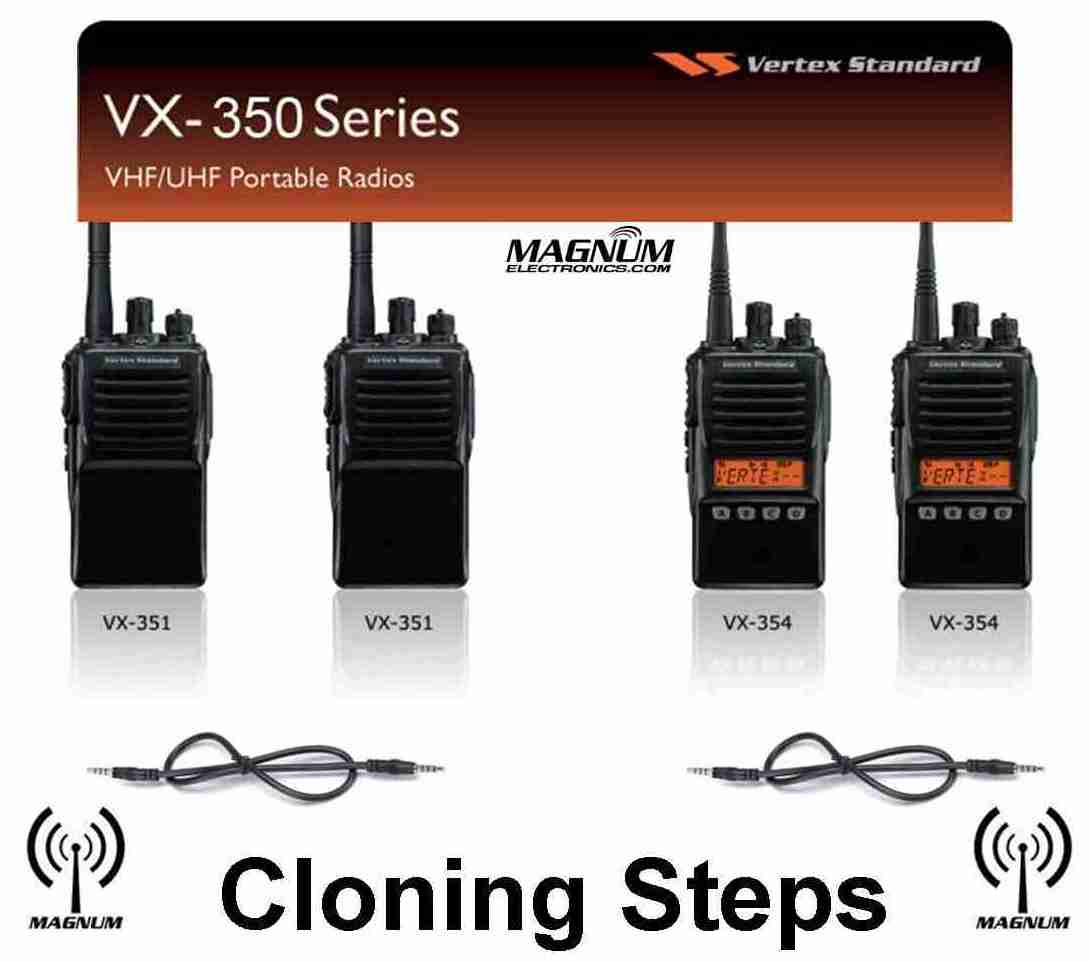
Vertex Standard VX-350 Series Cloning Procedure

Vertex VX-350 Series Cloning Steps

Vertex VX-351 or VX-354 Cloning Requires a CT-27A Radio-to-Radio Cable

Adding a new Vertex Standard VX-351 or VX-354 radios to your existing fleet is a simple process with the built-in cloning feature. All you need is a Vertex XURTS0008 CT-27A cloning cable  to transfer the programming information. A VX-351 will not clone to a VX-354 and all models must be identical using the same VHF or UHF band.

VX-350 Series Cloning is a 6 Step Procedure

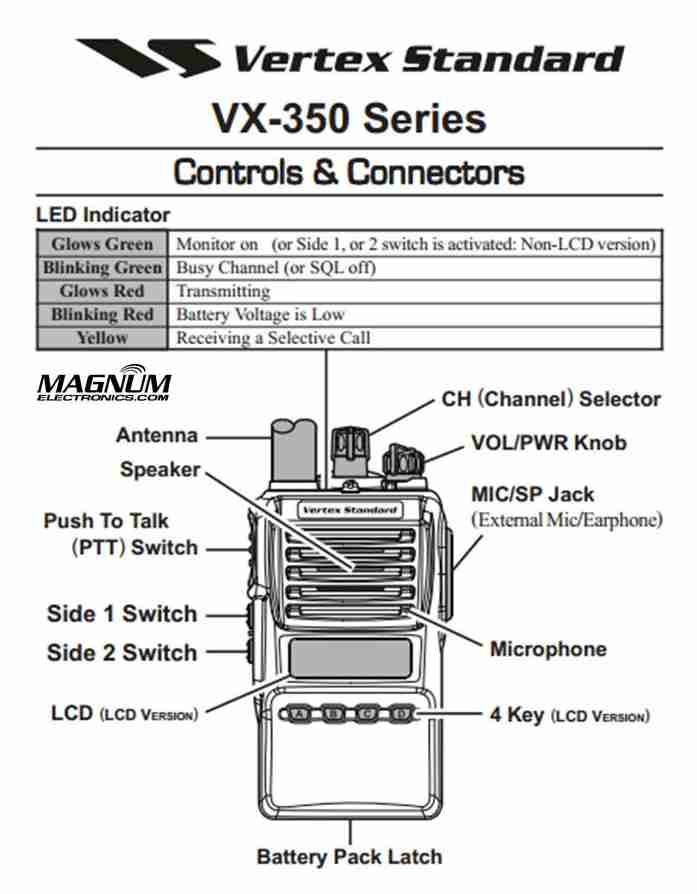
  1. Turn both radios OFFVertex 350 Buttons and Controls
  2. Connect the CT-27 cloning cable between the MIC/SP jacks of the two radios.
  3. Press and hold the “Side 1” key and the “PTT” key while turning the radio ON.  The LED will remain off and if a VX-354, it will display “CLONE”.
  4. Repeat step 3 on the other radio.
  5. To switch the radio to receive data, press the “Side 1” key. Then the LED indicator will glow “Green“.
  6. To switch the radio to transmit data, press the “PTT” key. Then the LED indicator will glow “Red“.

When the data transfer is successful, the VX-354 display will return to “CLONE” or if a VX-351, the TX/BUSY indicator will turn off. You are now ready for the next radio or turn both radios off and disconnect the CT-27 cable. You can then power on the radios and begin normal operation.

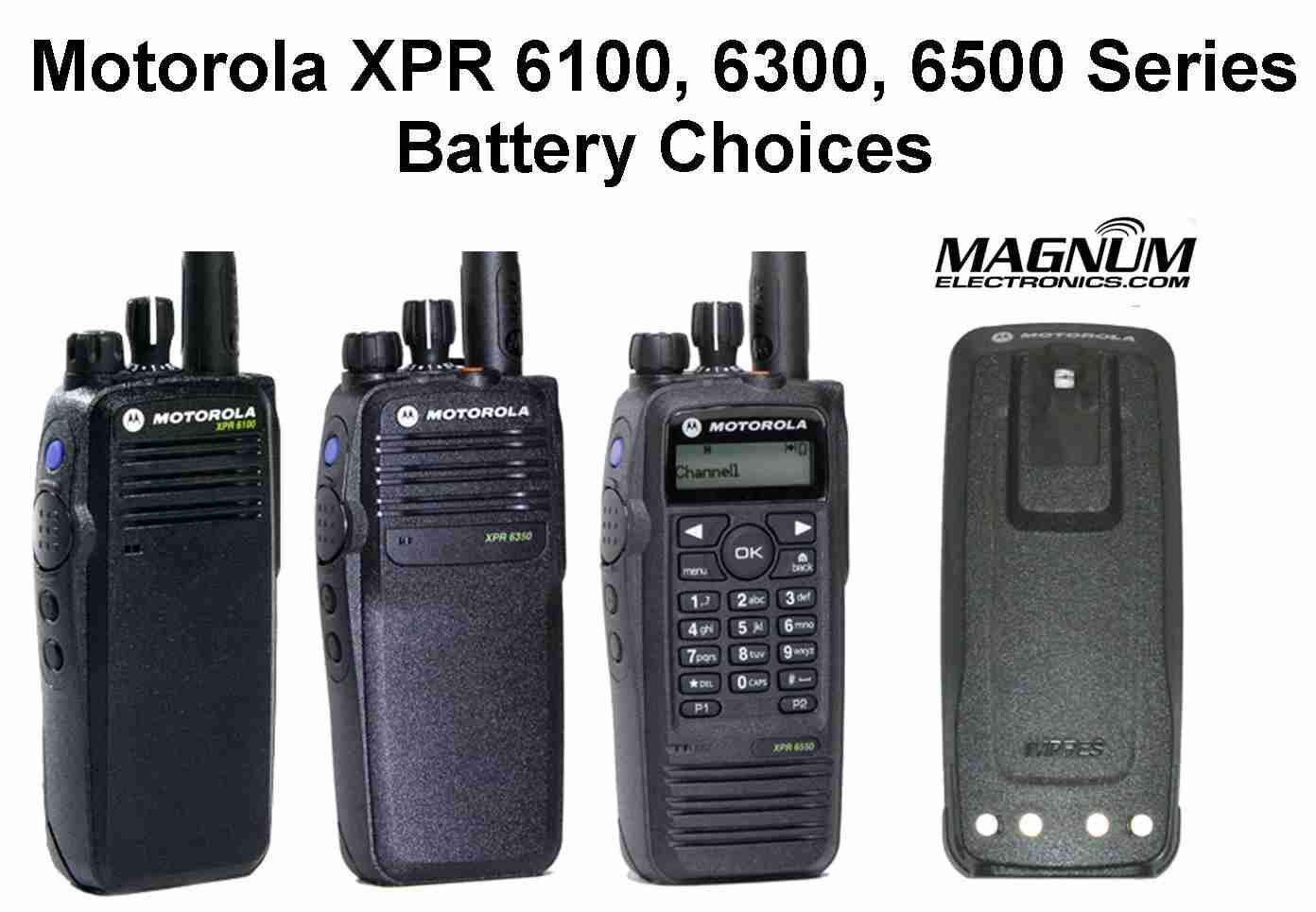
Motorola XPR 6100, 6350, 6550 Battery Choices Explained

MOTOTRBO Radio Battery Choices

Motorola Batteries for XPR 6000 Series Radios Use IMPRES Technology

Motorola introduced the MOTOTRBO DMR digital XPR 6300 (non-display) and XPR 6500 (display) series radios in 2007. Surprisingly, we still see some of the batteries with date codes five years old and still in use. It is probably due to the IMPRES automatic conditioning feature that Motorola patented about 10 years ago.

A fresh battery can improve your radio performance and eliminate intermittent problems when voltage fluctuates. Due to the new enhancements with MOTOTRBO (i.e. Bluetooth, LTR, GPS, lone worker, etc) you should make sure you choose the best battery for your needs. Replacement batteries do not include a belt clip so be sure to remove it from the old battery.

All Batteries Carry a Submersible IP57 Rating

All Motorola XPR 6000 series MOTOTRBO batteries are built tough with a IP57 submersibility rating meaning it can withstand being under three feet of water for 30 minutes. IMPRES smart charging is also standard on all four battery choices.

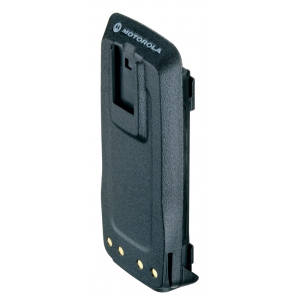
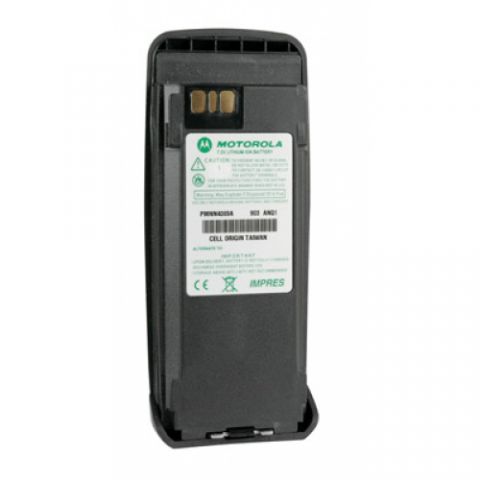
PMNN4077C is the Most Popular MOTOTRBO Battery with Highest CapacityMOTOTRBO PMNN4077 High capacity battery

The Motorola PMNN4077C is the most popular battery because it provides the highest capacity at 2,200 mAh. The extra capacity is needed if you use a Bluetooth adapter, optional LTR trunking board, or if you require maximum battery life for long shifts. It uses Li-ion chemistry and is only slightly thicker than the PMNN4066A.

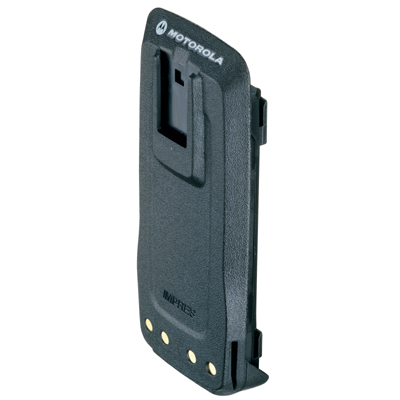
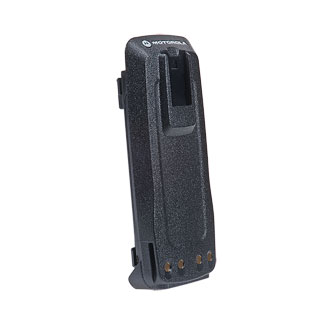
PMNN4066A Battery is Standard with XPR6100 and Original XPR 6300MOTOTRBO PMNN4066 battery

The Motorola PMNN4066A uses Li-ion chemistry with a 1,500 mAh capacity. It was included with the original XPR6300 non-display, non-GPS radio back in 2007. It is recommended if you use digital mode only and no power consuming options like GPS, Bluetooth, etc. It is slightly thinner but we normally recommend the higher capacity PMNN4077.

PMNN4069A Battery is FM Approved Intrinsically-Safe for Hazardous AtmospheresFM Intrinsically Safe battery

The PMNN4069A is the only FM battery that is intrinsically-safe rated. It has a green dot on the bottom of the battery and a FM label. It must be used with a XPR radio that includes the factory installed FM option. Look for the label on the radio and a green dot on the bottom of the radio. The battery capacity is 1,400 mAh and it uses Li-ion cells.

There is no benefit in purchasing a FM battery and using it with non-FM radios. It will work but there are no advantages.

Motorola PMNN4065A is the only NiMH Chemistry MOTOTRBO BatteryMOTOTRBO NiMH battery for cold weather

For anyone using their XPR 6000 series MOTOTRBO radios in extremely cold environments the PMNN4065A is the best choice. Li-ion batteries should be avoided because they do not perform well at low temperatures. The Motorola PMNN4065A NiMH battery has 1,300 mAh capacity and is a little heavier. It also is the most economical with the lowest price.

All of the above batteries are compatible with the XPR6100, XPR6300, XPR6350, XPR6380, XPR6500, XPR6550, and XPR6580 MOTOTRBO radios..

Not sure of the condition of your batteries? First, check the date codes and then consider investing in the Motorola NNTN7392 IMPRES battery reader if you have a large quantity.

Motorola Temple Transducers Provide Discreet Listening

2-Way Radio Headset Keeps Ears Uncovered

Motorola 2-way Radio Temple TransducerTemple transducers are available for most Motorola 2-way radios and are the only audio accessory that keeps your communications discreet without covering your ears. Loud and clear radio transmissions are received using transducers that rest on each temple. The ears are uncovered so you will hear normally when there is no radio traffic. People close by will not hear radio messages keeping your communications private.

Use Temple Transducers in High Noise Environments with Earplugs

Temple transducers can be more comfortable than muff style headsets in hot weather orSpring & Associates Driller when working on loud machinery. Maryland based Spring and Associates performed a comparison on their job site with extreme machinery noise using MOTOTRBO XPR6550  radios. The PMLN5101 temple transducer was preferred except when extreme noise levels approached 130dB.

Choose the Correct Temple Transducer for Your Radio

Motorola offers temple transducers with connectors for most of their radios. The new APX series radios have a direct wire connector and a new boomless model that is compatible with the APX display microphone.

APX 7000, 7000XE, APX 6000, 6000XE, APX 4000 Radio Models

RMN5116 Temple TransducerFor the new APX P25 series, choose the PMLN5101 temple transducer with boom microphone.

The boomless RMN5116 is the correct choice if you use a APX display remote speaker microphone.

XTS 5000, XTS 2500, XTS 1500, PR1500, MT1500 Radio Models

Rugged Temple Transducer

RMN5049

The standard temple transducer with the XTS series connector is the RMN4049. There is also a more rugged version, RMN5049, that includes an adjustable headband keeping it more secure when repelling, jumping, or performing other physical activity. These are also compatible with HT1000, JT1000, MTS2000, MT2000, MTX8000, MTX9000, XTS3000, and XTS3500.

MOTOTRBO XPR 6100, 6350, 6550, 7350, 7550 Radio ModelsMotorola PMLN5101

All Motorola XPR 6000 and 7000 series radios are compatible with the PMLN5101 temple transducer. An oversized PTT and coiled cord is included.

There is no temple transducer available yet for the XPR3300, XPR3500, or SL7550.

Motorola HT750, HT1250, HT1550, PR860 Radio Models

The RMN4048 is the correct temple transducer model if you have a Motorola HT750/1250/1550, PR860, MTX850, MTX8250, MTX950, or MTX9250.

There is a rugged version, RMN5048 with an adjustable headband too. Both have a large PTT body switch.

Motorola EX500, EX560, EX600 Radio Models

The Motorola EX radio compatible temple transducer is the PMLN4585.

Motorola BPR40, CP110, CP185, CP150, CP200, PR400

CP200 Temple TransducerChoose the PMLN5003 boomless lightweight temple transducer with in-line microphone and 2 prong connector. Adjustable for use on long shifts. Not suitable for high noise environments.

Also compatible with P1225, CP125, VL130, CT150, CT250, CT450, GP300.

Motorola DTR410, DTR650, VL50

The RMN5114 is the correct choice. Although it uses a similar sized 2 prong connector like the PMLN5003, they will not fit the jack.

APX XE Remote Microphone with Strobe Light Now in 3 Colors

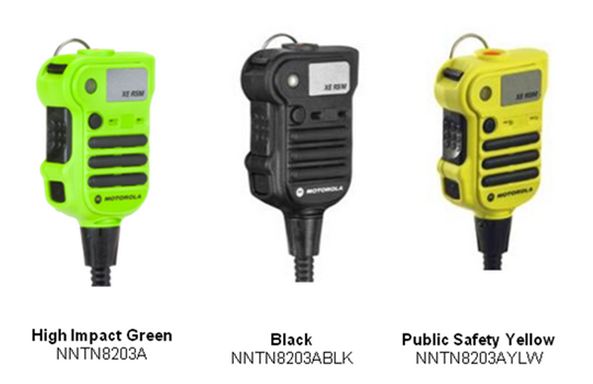
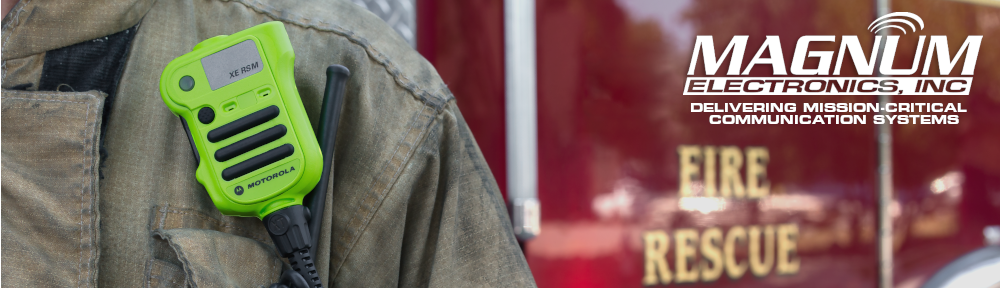
Motorola NNTN8203 Strobe MicrophoneMotorola NNTN8203A APX XE is Designed for Firefighters

It is now possible to color match your APX radio and remote speaker-microphone. Available in high impact green, black, or public-safety yellow, the NNTN8203A is compatible with the APX 7000XE, APX 7000, APX 6000XE, APX 6000, and SRX2200. The new APX 4000 uses a different audio connector and is not compatible.

APX XE Dual Microphones Provide Best-in-Class Audio

The NNTN8203 is the first audio accessory to have 2 microphones that provide advanced noise suppression. The second microphone is able to differentiate voice from background noise and electronically cancel out the unwanted sounds. The speaker is also 50% louder than the XTS 5000 series speaker-mics.

Strobe Light Visible Up to 10 Feet in Smoke

A high visibility strobe light activates when the emergency button is pressed for firefighter safety. The microphone is powered by the radio so there is no need for additional batteries. The rugged, submersible design includes an IP67 rating, FM Approval for intrinsically-safe environments, and a 6 foot coiled cord.

Want to Buy License-Free FRS Talkabout Radios? Read this First

There are Better Choices for License-Free On-site Radio Communications

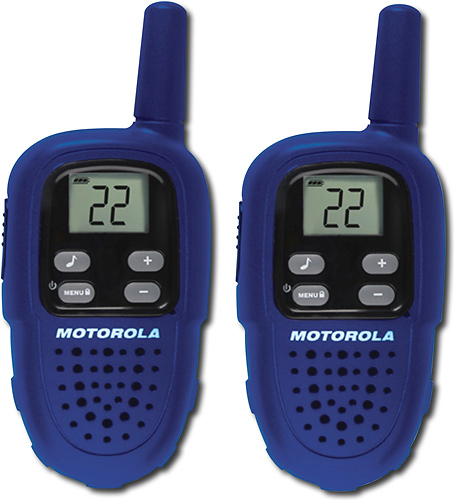
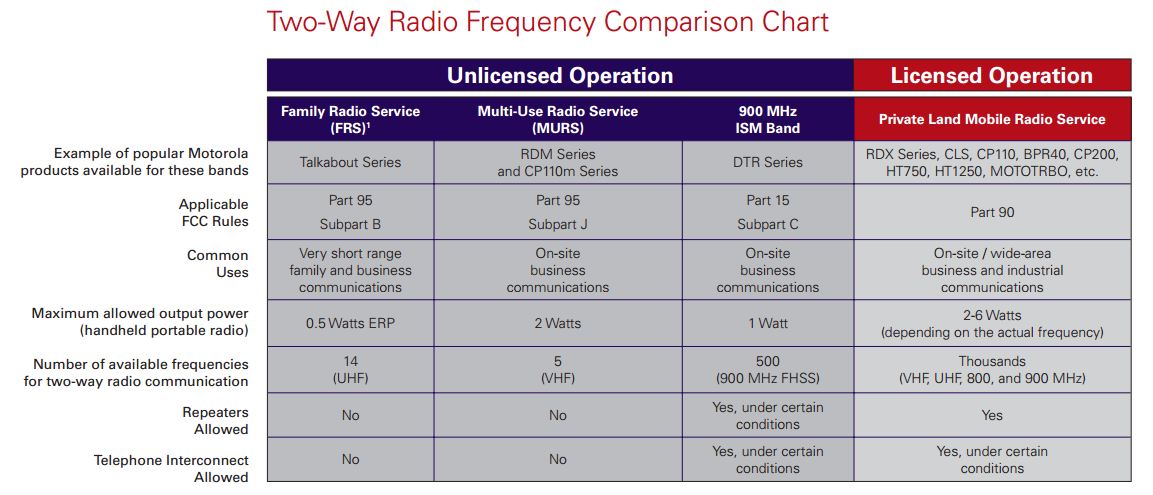
FRS Radios are low power and License freeHotel and retail business owners and general managers often purchase analog Part 95 FRS (Family Radio Service) radios for on-site communications. You can find them almost anywhere at very low prices and there is no FCC license required.

After a few months, the batteries do not last an entire shift, dead spots increase, and interference from children can become unbearable when directing your employees. Some FRS radios also have higher power GMRS (General Mobile Radio Service) frequencies for better range but require a costly FCC license in an individual’s name – not the business.

Part 95 MURS Band is a Better Choice for License Free Communications

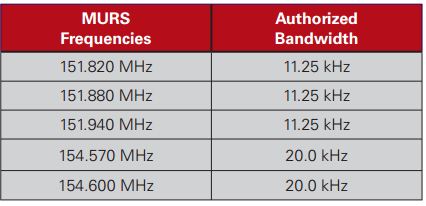
Part 95 MURS Frequencies

MURS (Multi-Use Radio Service) band consists of five frequencies designated for private, 2-way, voice and data communications for individual and business use. Power output limitation is two watts and 4 times greater than FRS. Although there is no protection from possible interference from other users, the MURS band is a much better alternative when choosing license-free channels. Repeaters and signal boosters are not allowed and operation in aircraft is prohibited.

Motorola CP110m is Designed for MURS Operation

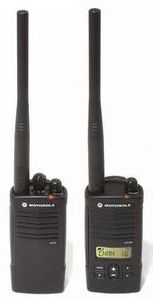
The Motorola CP110m is available with 2 or all 5 MURS analog channels.Motorola CP110m MURS 2 & 5 channel radios It provides better battery life and is rated IP54/55 for water and dust resistance. It uses the same batteries and accessories as the Motorola RDX series.

The CP110m will provide coverage in a 10 story hotel up to 200,000 square feet. You can purchase an optional 2 or 3 year warranty. Expect the radio to be in service for a long time. Scan, VOX (voice operated transmit) hands-free operation, and voice scramble provide a lot of value for the low price.

CP110m programming software is free from Motorola and cloning is easy using the included chargers. All you need is the USB programming cable (RKN4155) and a cloning cable (RLN6303) if you want the ability to make any changes to your privacy codes or frequencies.

Many other Motorola and Vertex Standard analog portable radio models can be programmed to use MURS channels using the low power setting. This helps with interoperability when working with other companies and provides more flexibility for your future requirements.

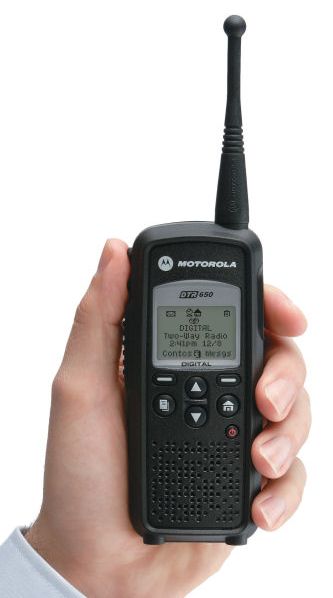
Part 15 900 MHz ISM Band is License Free for DTR Digital RadiosMotorola DTR digital license free radio

900 MHz ISM band provides better building penetration for up to 20 floors.The DTR650 digital radio can also provide one-to-one private communications when needed. It is only compatible with other DTR radios.

Text messaging for discreet messaging, unit ID, long battery life, and call alert are just some of the digital features included. Free programming software is also available for this model.

Priced significantly less than $300 it is the best choice for on-site communications using license-free spectrum.

FCC License Free vs. Licensed 2-way Radio Spectrum

Obtaining a FCC license is still the best alternative for your business because you will have less interference, more range, and many more radio choices. We have many customers using MURS and ISM band that have are very satisfied with their radios for many years. Feel free to contact us to determine if license free communications will work for your business.

FRS MURS ISM FCC License Comparison Chart

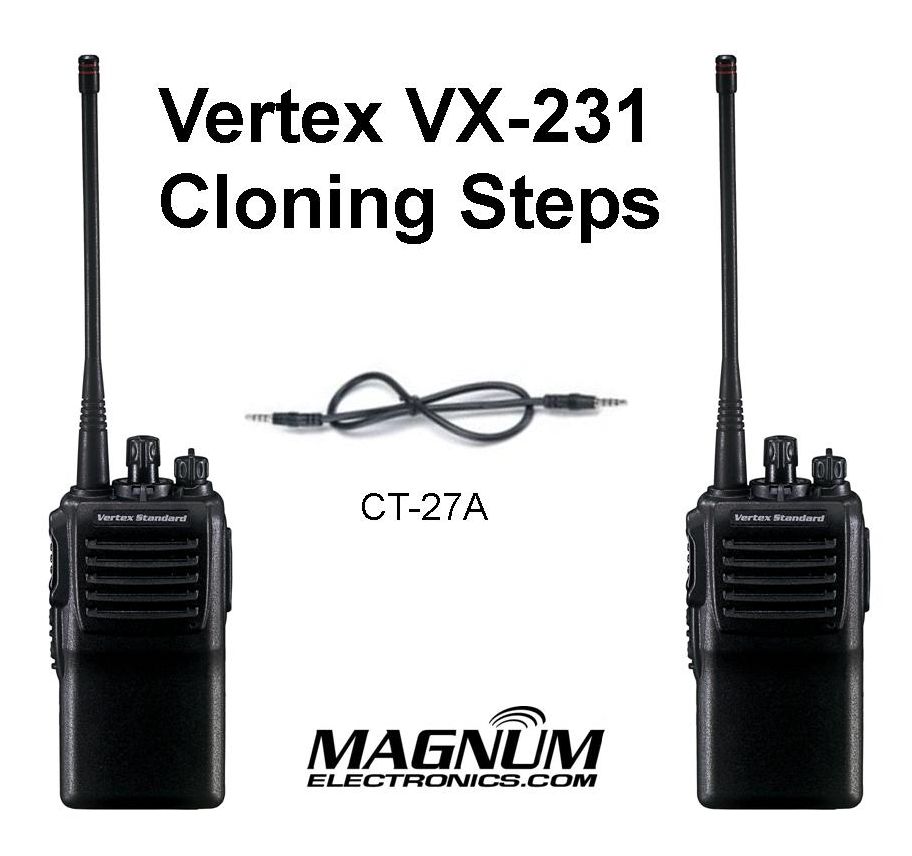
How to Clone a Vertex VX-231

VX-231 Cloning Requires a CT-27A Cable

Vertex VX-231 Radio-to-Radio Cloning Requires a CT27A Cable

Vertex Standard VX-231 2-Way Radio Includes Easy Cloning Feature

The Vertex VX-231 radio model includes a radio-to-radio cloning feature that makes it easy to add new radios to your existing fleet. All you need is a Vertex CT27A cloning cable and identical VX-231’s on the same frequency band split.

Instructions to Clone Vertex VX-231 Radios

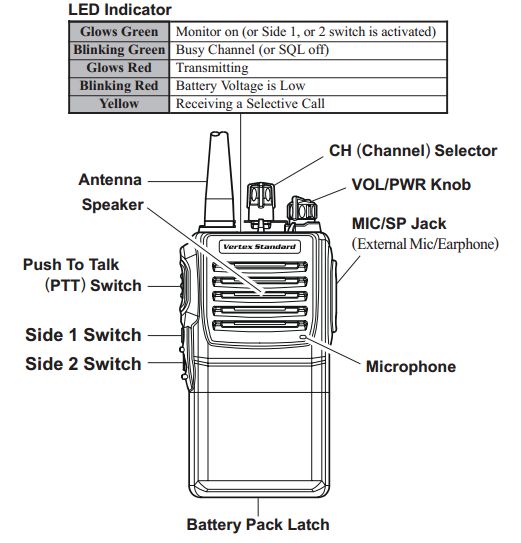
  1. Turn radios offVX-231 Knobs, Buttons, LED Lebels
  2. Connect the CT27 cloning cable to the MIC/SP jacks
  3. Press and hold the “Side 1” key and the “PTT” key while turning the radio ON.  The LED will quickly blink green and red then go out.
  4. Press the PTT button once to put the radio in “CLONE” mode, the LED indicator will glow “Orange”.
  5.  Repeat steps 3 and 4 on the other radio.
  6. To switch the destination radio to receive data, press the “Side 1” key. Then the LED indicator will glow “Green“.
  7. To switch the source radio to transmit data, press the “PTT” key. Then the LED indicator will glow “Red“.
  8. If the cloning is successful, the LED indicator will go out.

Cloning will transfer transmit and receive frequencies, privacy codes, channel power levels, narrow or wide bandwidth, and other programmable features. It cannot change a radio from VHF to UHF or a UHF low split to the higher split.

Check the Date Codes of Your 2-Way Radio Batteries

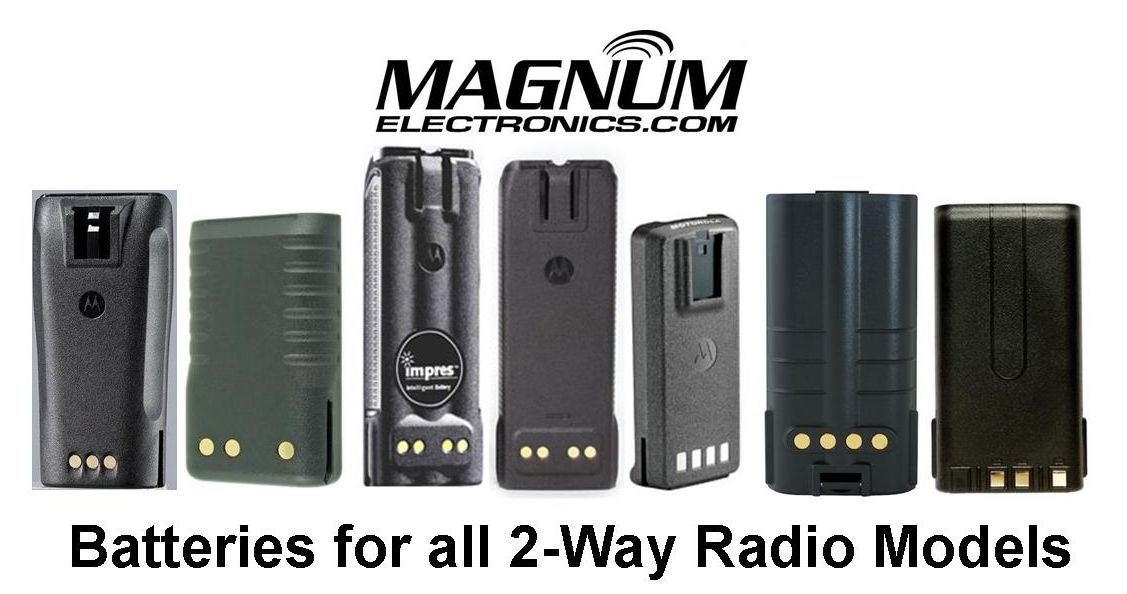
Magnum Electronics Supplies Batteries for All 2-Way Radio Models

It is that time again to check your radio batteries so you keep your communications loud and clear. Batteries begin to degrade after 18-24 months of use and can affect radio performance. Many intermittent radio problems are solved with a fresh battery.

How to Read a Motorola Battery Date Code

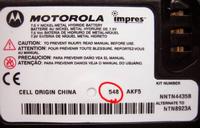
All Motorola batteries have a 3 digit date code on the battery label. Check the date codeMotorola Battery Label and Date Code Circled on your Motorola battery and if the first digit is a “0” or “9” it is a good time to replace it.

The first digit represents the “Year” and the next digits are the “Week” manufactured. For example; 036 is the 36th week of 2010.

All Motorola batteries carry a replacement warranty of at least a year after the date code and probably longer if marked IMPRES or contain NiCD cells.

Replacement Batteries for Motorola, Vertex, & Other Radio Manufacturers

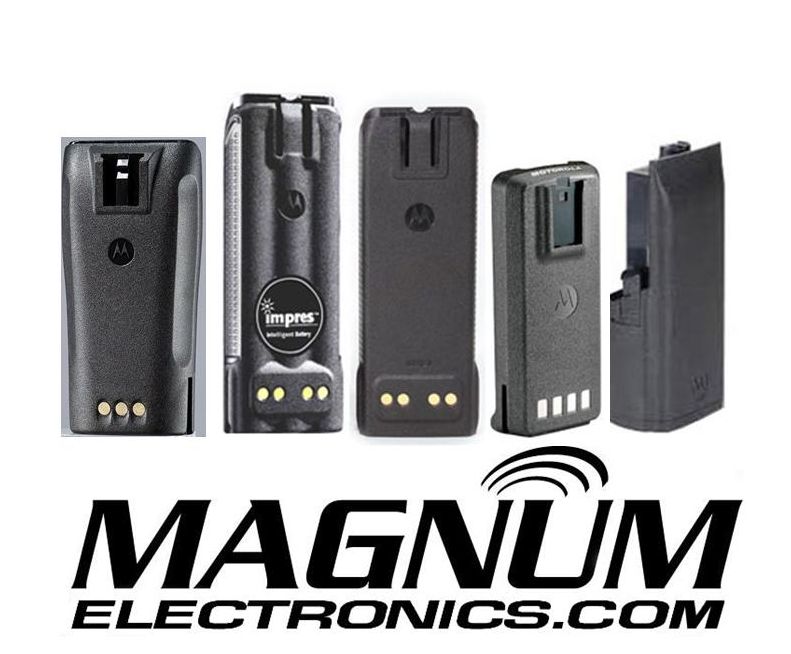
We carry Motorola Original OEM, Vertex-Standard OEM, and Power Products batteries for all current and discontinued radio models.

Below are links to the most popular and recommended batteries:

We also carry replacement batteries for Harris, Kenwood, Icom, Tait, and many other hard to find models. Check our 2-Way Battery selection or call us and we will be happy to help you find the best battery for your needs.

Battery Technology – Lithium Ion vs. Lithium Polymer

2-Way Radio Batteries What is different between Li-ion and Li-Polymer Batteries?

We have received several inquiries about the newest battery technology, Li-Po, that is now available for 2-way radios. Historically, NiMH was an improvement as compared to NiCD and Li-ion has many advantages over NiMH. The assumption that Li-Po is now the best battery for your radio is more marketing than anything else.

Li-Po or Lithium Polymer battery cells still use the same chemical material as Li-ion but the difference is the way they are packaged. Li-ion batteries use a thick-walled, rigid aluminum case for the cells and Li-Po utilizes a new thinner foil aluminum case. Bottom line is the difference is all in the cell construction.

Both Li-ion and Li-Po are Recommended But Check the Specs

Li-Po battery manufactures must add a more rugged case to meet the mission-critical specs required for two-way radio specifications. When comparing Li-ion and Li-Po batteries the following should be considered:

  • Battery capacity measured in mAh – The higher the mAh number the longer your battery will work before needing a recharge. When comparing specs be careful when you see the words “typical” or “average” and not “minimum” or “rated”. Our experience is there can be a big difference in actual results.
  • IMPRES or Advanced Charging Technology – “Smart battery” automatic conditioning improves performance and keeps them in service longer.
  • Drop Specification – Dropping the radio is probably the most common reason why batteries fail. Most Motorola mission-critical batteries are rated at 36 drops from 5 feet to a concrete floor.
  • IP (Ingress Protection) Rating – Higher IP numbers are better and signify the ruggedness of the battery. The first number references solids and the second number signifies liquid protection. The highest solid number is “6” (dust tight) and the highest liquid is “8” (submersibility beyond 1 meter).
  • Overvoltage protection circuit – Better batteries have 2 levels, some have 1, and lower cost batteries may not include have protection at all.
  • Temperature Range – Extreme cold affects Lithium battery performance and the spec should be investigated if your environment is outside “normal”.
  • Intrinsically-Safe Rating – FM Approval is important if you use your radio in hazardous, combustible atmospheres where an electrical spark could cause an explosion.

Firefighter Training Video Demonstrates Proper Radio Operation

Motorola and the International Association of Fire Chiefs (IAFC) produced a training video, “Loud & Clear”, demonstrating the best practices of 2-way radio operation. The 15 minute video compares both analog and digital radio transmissions in typical firefighter environments.

You will learn how to maximize the clarity of your voice transmissions and minimize background noise. Recommended for anyone using professional mission-critical 2-way communications.